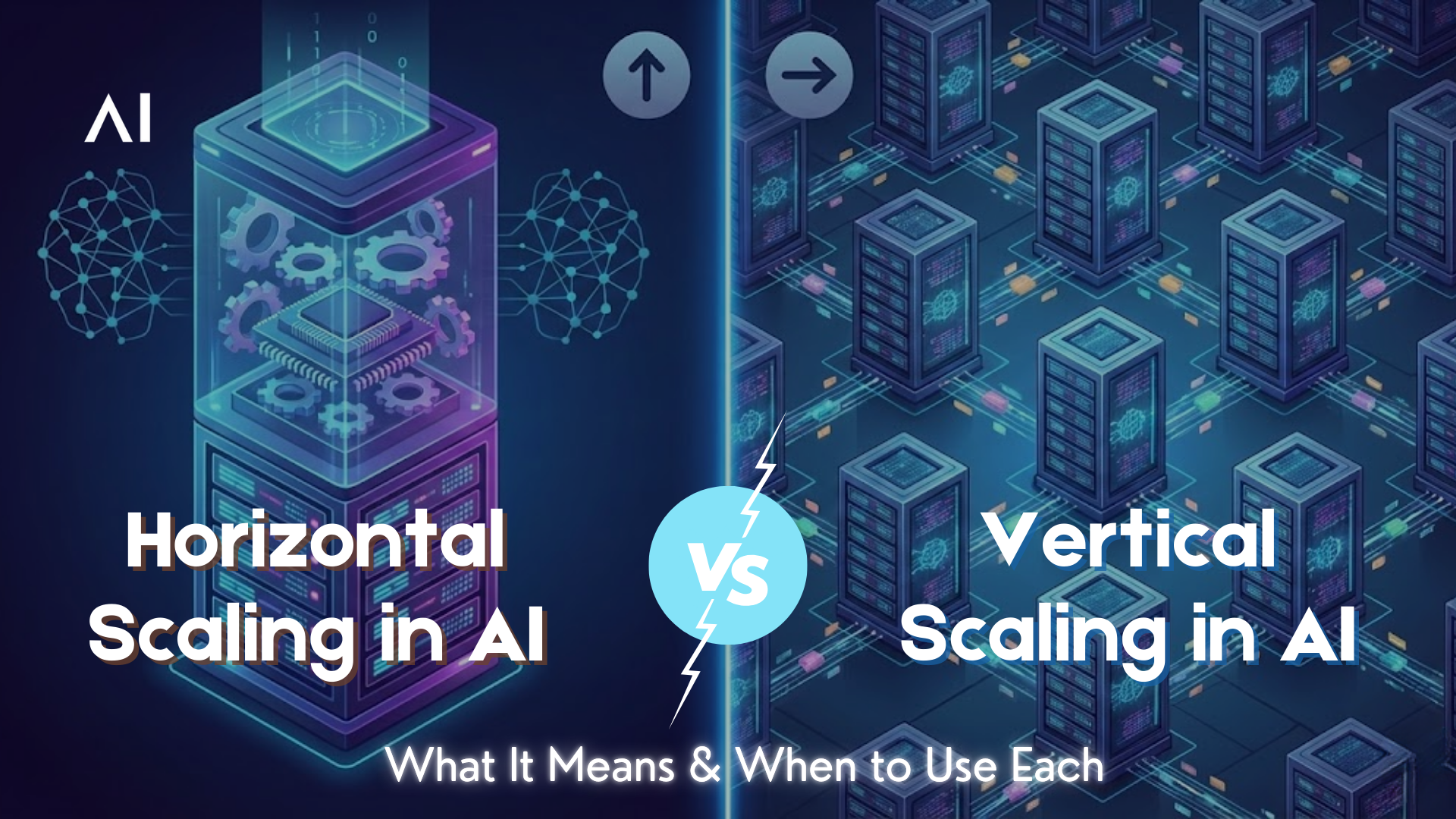
Horizontal vs Vertical Scaling in AI: What It Means & When to Use Each

TL;DR
- Vertical scaling upgrades a single machine’s power; good for early-stage or low-volume AI.
- Horizontal scaling distributes AI tasks across many machines; ideal for large-scale, production-ready workloads.
- Horizontal scaling enables high availability, fault tolerance, and real-time performance.
- Vertical scaling is simpler to set up but has limits in scalability and cost-efficiency.
- Hybrid strategies often combine both, especially in enterprise AI and Agentic AI stacks.
- Horizontal scaling underpins modern AI agents, RAG, and autonomous workflows.
Introduction: Scaling Is Foundational to AI Success
As AI systems handle increasingly complex tasks, the pressure on infrastructure grows. Whether you're training large models, deploying chat agents, or running multi-modal AI workflows, how you scale determines how fast, reliable, and cost-effective your solutions are.
The two primary approaches — horizontal and vertical scaling — are both critical but serve different needs. Understanding their roles is essential for designing resilient AI architectures.
What Is Vertical Scaling in AI?
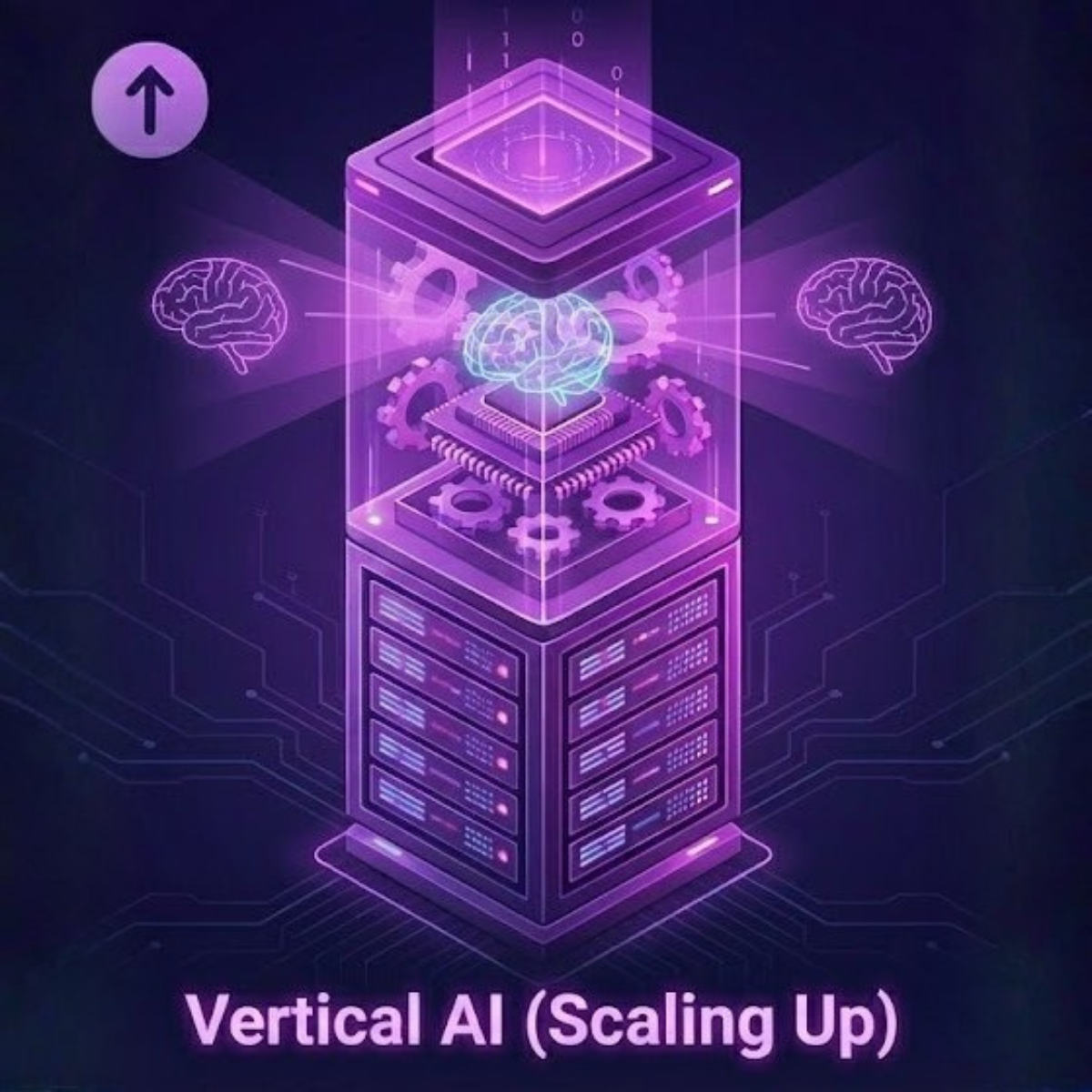
Vertical scaling, or "scaling up," means increasing the power of a single machine. You add more CPU, RAM, or GPU to handle greater workloads.
Benefits:
- Simple to implement for early-stage or low-volume AI workloads
- Useful for inference tasks or small-scale deployments
- Easier for teams without deep distributed systems experience
Limitations:
- Hardware limits restrict scalability
- Single point of failure
- Cost scales poorly with increased demand
Example: Running a small transformer model for local inference on a GPU-enabled instance.
What Is Horizontal Scaling in AI?
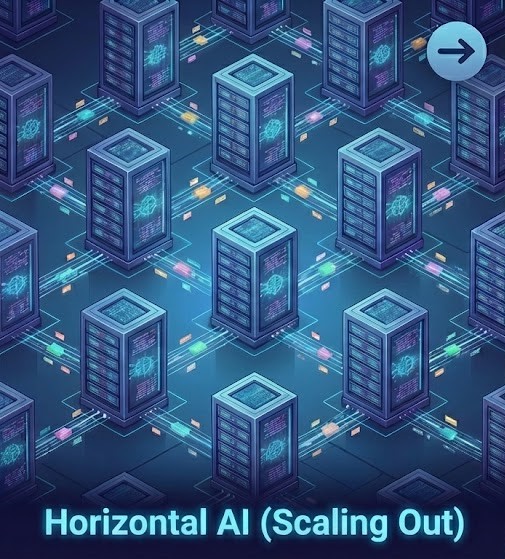
Horizontal scaling, or "scaling out," distributes workloads across multiple machines or nodes. This approach is designed for the demands of production-grade AI.
Why It Matters: AI workloads — from large language models to real-time recommendation systems — often exceed what one machine can handle. Horizontal scaling ensures performance remains steady under pressure.
Benefits:
- High availability and fault tolerance
- Elastic capacity for changing workloads
- Parallel processing of data and models
Example: Training an LLM across 16 GPUs using a distributed cluster with frameworks like Ray, Horovod, or Dask.
You can also see how horizontal scaling powers secure customer support.
Side-by-Side Comparison Table
| Feature | Vertical Scaling | Horizontal Scaling |
|---|---|---|
| Architecture | One powerful machine | Multiple distributed nodes |
| Fault Tolerance | Low (single point of failure) | High (redundancy built-in) |
| Scalability | Limited | Virtually unlimited |
| Use Case Fit | Inference, MVPs, edge AI | Training, production deployment, RAG |
| Cost Efficiency | Poor at scale | Improves with scale |
Why Horizontal Scaling Dominates in Modern AI
Today’s AI models are bigger, smarter, and require more compute. Whether you're deploying a customer-facing chatbot or retraining a multimodal model weekly, single-machine setups can't keep up.
That’s why horizontal scaling is at the heart of how enterprises run Agentic AI platforms. It supports:
- Distributed training for foundation models
- Real-time inference at scale
- Multi-agent workflows across business functions
- Scalable orchestration engines
When Vertical Scaling Still Has a Role
That said, vertical scaling still makes sense for:
- Early-stage development
- Local inference with limited load
- Edge deployment where size and power constraints exist
It’s especially useful in hybrid environments.
Combining Both: Hybrid Scaling Strategies
In many cases, the best solution is hybrid:
- Start with vertical scaling for development
- Transition to horizontal scaling for deployment
- Mix both in hybrid cloud architectures that support dynamic workloads
This strategy is becoming more common in Agentic AI stacks — where LLMs, RAG, and API agents interact across multiple compute environments.
Final Thoughts
Scalability in AI isn’t just about compute. It’s about the ability to adapt, grow, and deliver results — securely and efficiently — as business needs evolve. Horizontal scaling provides the flexibility and resilience modern AI systems demand.
But smart infrastructure design doesn’t always choose one or the other. It picks the right approach at the right time.
To truly unlock the power of Agentic AI, scaling must be intentional, strategic, and always ready for what’s next.