Exploring Autonomous AI Agents: Their Functionality, Importance, and Future Impact
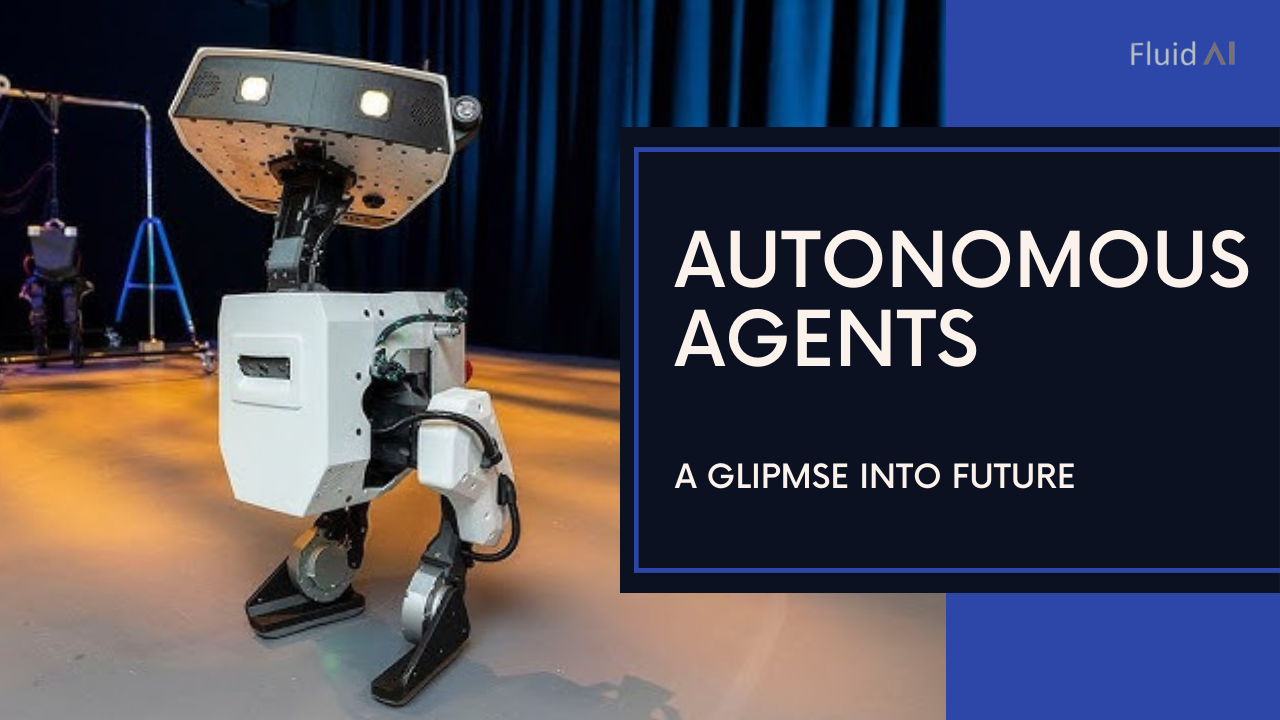
Navigating the World of Autonomous AI Agents: Understanding What they are, How they work, and Why they are the Future?
The realm of artificial intelligence (AI) is rapidly evolving, giving rise to a new breed of intelligent systems known as autonomous AI agents. These self-directed entities are poised to transform numerous industries and aspects of our lives, making it crucial to grasp their essence, significance, and inner workings.
What are Autonomous AI Agents?
Autonomous AI agents are software programs that can perceive their environment, make decisions, and take actions independently, without human intervention. Think of it like an independent human who can take their own actions using their brain (Neural Networks). They are equipped with advanced AI capabilities, enabling them to learn, adapt, and evolve over time. Unlike traditional AI systems that require specific instructions, autonomous agents can set their own goals and devise strategies to achieve them.
How do Autonomous AI Agents Work?
At the very core of it, they work like our human brains do - think, perceive, and react. They act according to the data and the past knowledge they collected from the internet and then based on millions of bits of data calculations, they make the decision. Now let's dive a bit deeper. The inner workings of autonomous AI agents involve a complex interplay of various AI techniques and algorithms. Here's a simplified overview for you to understand:
- Perception: They gather information from their environment using the Internet (in the case of Software Agents) and Sensors, cameras, or data feeds (in the case of Hardware Agents like in self-driving cars).
- Decision-making: They process the gathered information, assess options, and decide based on their goals and knowledge.
- Action: They execute actions in the real world or virtual environments, using software interfaces, or communication protocols.
- Learning and Adaptation: They continuously learn from their experiences, refining their decision-making and adapting to changing circumstances.
Why are Autonomous AI Agents Important?
As we move towards a more autonomous world, the emergence of AI agents holds immense potential for a wide range of applications and benefits Here are some key reasons why they matter:
- Automating Redundant Tasks: Autonomous agents can automate complex tasks and processes, freeing up human time and effort for more creative and strategic endeavors. For example, checking how much your company spends and on what tasks on a daily basis is quite monotonous work, think of an AI agent sending a mail to you daily for the same, also suggesting better and more economical ways.
- Continuous Improvement unlike Humans: Their ability to learn and adapt leads to continuous optimization, driving efficiency gains across various industries. As humans, we have limited capabilities to do improvement but with AI agents, this can be a never-ending cycle.
- Personalization and Assistance: They can personalize experiences and provide assistance in various domains, from customer service to healthcare. These AI Agents understand the context of a conversation, record and then suggest the answers which can provide a very tailored solution for your problem.
- SuperHuman Capabilities: Their ability to analyze vast amounts of data can uncover hidden patterns and insights, fueling innovation and decision-making.
Real-world Applications of Autonomous AI Agents
Autonomous AI agents are already making their mark in various domains, with their potential applications expanding rapidly. Here are a few examples:
- AI Software Development Teams: As astonishing as it may sound but one person teams with CTOs, Program Managers, and Developers as AI agents are a reality now. You should check out Chatdev.
- Robotics and Automation: AI agents power robots in manufacturing, logistics, and healthcare, enabling them to perform complex tasks autonomously. Amazon’s Robot Working Force is a perfect example.
- Cybersecurity Agents: AI agents can detect and respond to cyber threats in real time, protecting networks and systems from attacks. A lot of cybersecurity companies are investing in it to get the best out of it and give their services a 10x boost.
- Self-driving Cars: Autonomous vehicles use AI agents to navigate roads, perceive surroundings, and make driving decisions. Well, we all have seen Tesla’s now.
- Financial Trading: AI agents can analyze market data, identify patterns, and execute trades autonomously, optimizing investment strategies.
The Future of Autonomous AI Agents
The future of autonomous AI agents is brimming with possibilities. As AI capabilities continue to advance, these agents will become increasingly sophisticated, taking on more complex tasks and seamlessly integrating into our lives. They will play a transformative role in shaping the future of work, healthcare, transportation, and many other industries.
In conclusion, autonomous AI agents represent a significant leap forward in the field of artificial intelligence. Understanding their capabilities, applications, and potential impacts is essential as we navigate the rapidly evolving landscape of AI. With careful planning and responsible development, these intelligent agents can become powerful tools for enhancing productivity, innovation, and overall well-being.
_1790254083168-CB8e8KXC.png)