AI in Caribbean Banking: How 8 Regional Banks Are Exploring Agentic AI with Fluid AI

TL;DR
TL;DR
Caribbean banks are exploring Agentic AI to improve customer support and internal operations without expanding teams.
In workshops conducted by Fluid AI and the Caribbean Association of Banks (CAB), eight regional institutions identified high-impact AI opportunities such as:
- Automating customer requests
- AI chat support for banking websites
- Understanding customer needs through data insights
- Internal workflow and mailbox automation
Using a value vs feasibility framework, banks prioritized the most practical use cases that can deliver quick results.
The article highlight how Caribbean banks are beginning to adopt AI strategically, focusing on practical deployments rather than experimental technology.
Across the Caribbean, banks are entering a new phase of digital transformation.
Customers today expect fast responses, intuitive digital channels, and support that works whenever they need it. Whether someone is reaching out through a website chat, mobile banking app, email, or a phone call, the expectation is simple: banking should be quick and effortless.
For many financial institutions in the region, meeting these expectations with traditional systems and limited operational teams is becoming increasingly difficult.
This is where artificial intelligence in Caribbean banking is beginning to play a meaningful role.
Over the past few months, Fluid AI conducted a series of Agentic AI strategy workshops in collaboration with the Caribbean Association of Banks (CAB). The goal was to identify practical opportunities where AI can improve banking operations and customer experience.
Eight institutions participated in these working sessions:
- Hakrinbank N.V.
- ALL CAPITAL BANK AND TRUST LTD.
- VM Group
- JN Cayman
- IBIS Management Associates Inc.
- 1st National Bank St. Lucia
- The St. Vincent Co-operative Bank Ltd
- Agricultural Development Bank of Trinidad & Tobago
Rather than focusing on abstract technology trends, the workshops explored a much more practical question.
Where can AI deliver immediate value inside Caribbean banks?
To answer that, it is important to understand why AI adoption is accelerating across the region.
Why AI Adoption Is Growing in Caribbean Banking?
Across nearly every CAB workshop discussion, one pattern emerged. Customer interactions are increasing while operational teams remain limited. Banks today receive requests through multiple channels:
- phone calls
- website chat
- mobile banking platforms
Many of these interactions involve routine questions about accounts, transactions, card services, or product information. Handling these requests manually consumes valuable time for support teams.
This operational pressure is one of the primary reasons banks globally are investing in AI-powered banking solutions and intelligent automation systems.
For Caribbean institutions, the opportunity is especially interesting.
AI does not require banks to dramatically expand their workforce. Instead, it allows them to scale customer support capacity using intelligent systems that can handle thousands of interactions simultaneously.
This realization naturally leads to the next question banks ask, Where should we start?
Identifying the Most Valuable AI Opportunities in Banking
One of the biggest mistakes organizations make when exploring AI is trying to automate everything at once.
The CAB workshops therefore focused first on identifying the most valuable and realistic AI use cases for banks.
Participants mapped potential applications across departments such as customer support, operations, marketing, IT, and risk.
Some examples included:
- customer request automation
- AI chatbots for bank websites
- internal workflow automation
- fraud monitoring systems
- customer journey assistance
- AI-powered marketing insights
However, simply listing possibilities is not enough. Banks also need to determine which of these ideas are worth implementing first.
To solve this, the workshops introduced a prioritization framework.
Implementing an AI Framework for Caribbean Banks
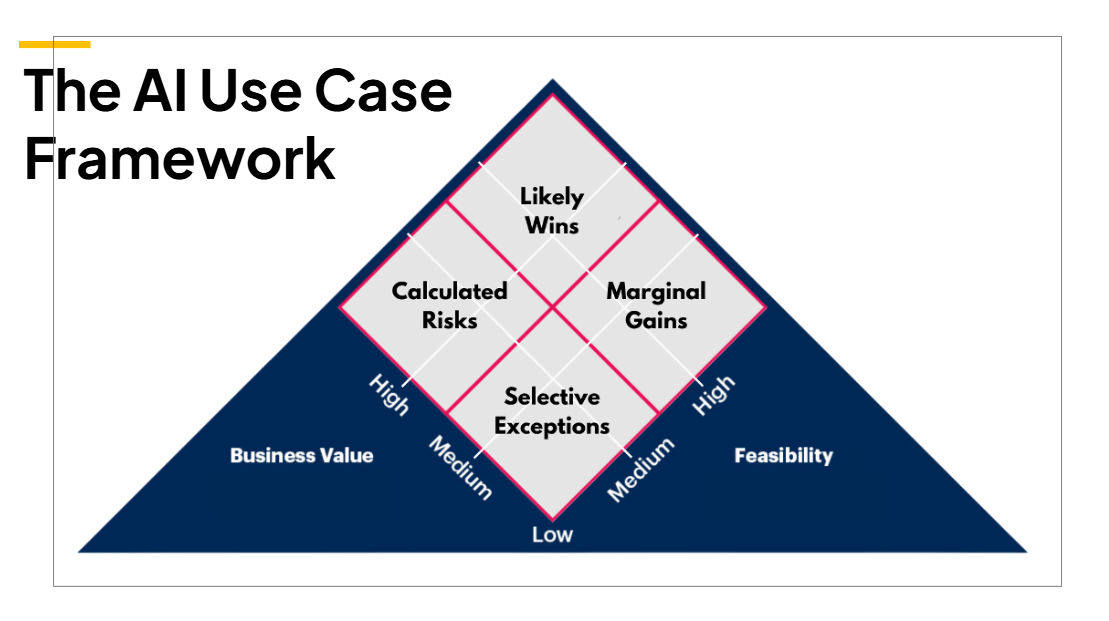
The prioritization process used a matrix that evaluated each potential use case across two dimensions.
- First, the business value the solution could deliver.
- Second, the feasibility of implementing it with existing systems and resources.
This framework helps banks avoid launching overly complex projects before they have experience deploying AI.
These included:
- handling customer requests related to core banking services
- deploying AI chatbots on bank websites
- sending automated reminders for payments and collections
- helping teams quickly understand customer needs
- internal mailbox and workflow assistance
Once these high-impact use cases are identified, the conversation naturally moves toward how modern AI systems can actually handle these tasks.
Top AI Use Cases for Caribbean Banks
Across the CAB workshops, several use cases consistently emerged as high-value opportunities for banks in the region.
- Customer request automation: Banks receive thousands of routine inquiries every month related to accounts, transactions, card services, and product information. AI assistants can respond instantly to these requests while maintaining accurate and consistent responses.
- Website chat support: Customers increasingly expect immediate answers when visiting a bank’s website. AI-powered chat systems can understand natural language questions and retrieve relevant information directly from internal knowledge sources.
- Understanding customer needs: AI tools can analyze patterns in customer interactions and help banks identify what customers are looking for, which products they might need, and how their financial behavior is evolving.
- Internal workflow automation: Many employees spend significant time searching for internal documents, responding to emails, or compiling reports. AI copilots can streamline these tasks by retrieving information and assisting with operational workflows.
Together, these initiatives represent the early stages of what many institutions are beginning to explore as Agentic AI in banking.
How Agentic AI Is Changing Customer Support in Banking
Traditional banking chatbots were designed to answer a limited set of predefined questions.
Agentic AI systems are far more capable.
Instead of relying on static scripts, modern AI assistants can retrieve information from multiple data sources, interact with backend banking systems, and guide customers through entire workflows.
For example, an AI assistant could understand a customer’s question, retrieve the relevant information from internal systems, and provide a helpful response instantly. If the issue becomes complex, the conversation can seamlessly transition to a human agent.
This hybrid support model dramatically increases service capacity.
Routine interactions are handled automatically, while human teams focus on cases that require deeper expertise or empathy.
For banks operating with smaller teams, this model can significantly improve both efficiency and customer satisfaction.
A Practical Roadmap for Implementing AI in Caribbean Banks
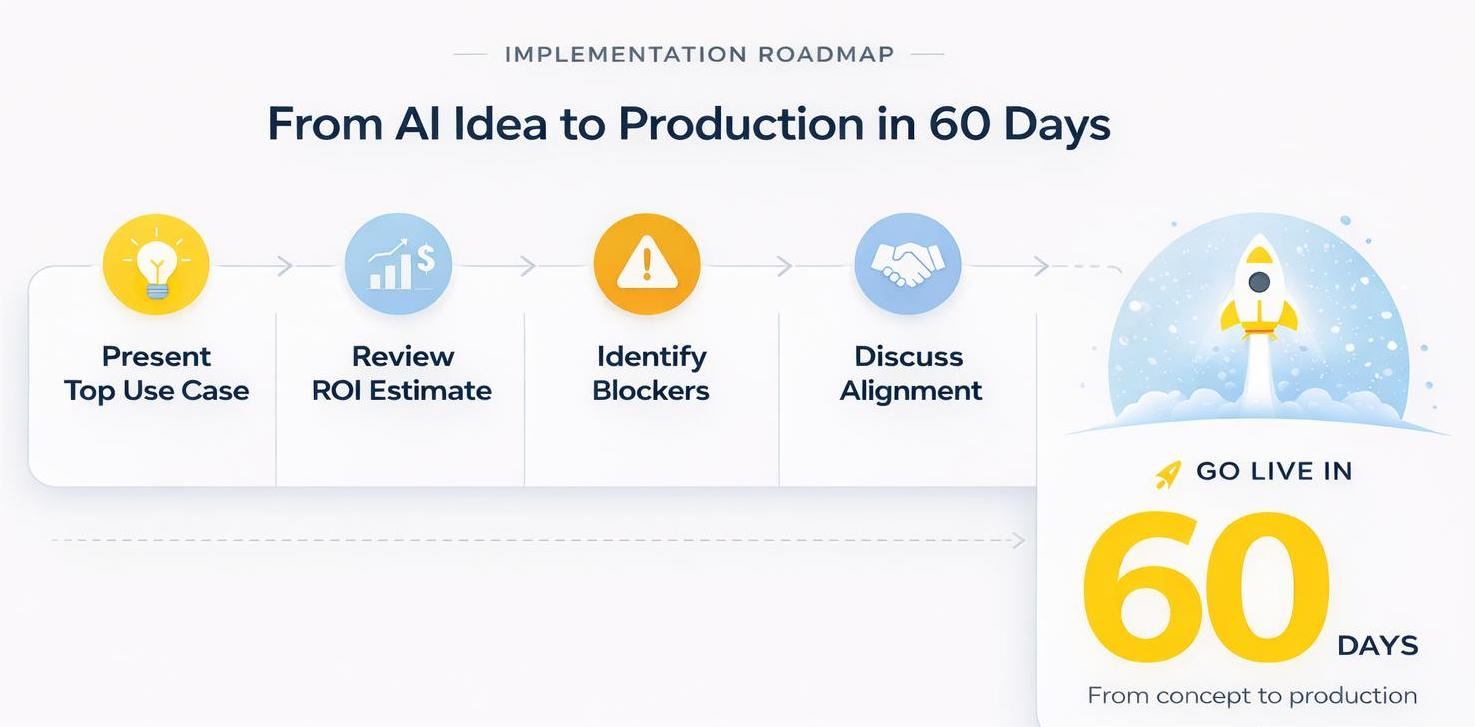
With the right prioritization and alignment, banks can move from concept to production in around 60 days. FluidAI structured AI roadmap process is designed to bring clarity and alignment before any development begins.
- Present the top use case.
Each department begins by sharing its highest-priority AI opportunity. The focus is on clearly defining the problem, the expected impact, and why this use case represents the most valuable starting point for AI deployment within that team. - Review the expected return on investment.
Teams walk through the estimated benefits of the proposed solution. This includes explaining how the ROI was calculated, the assumptions behind the numbers, and the operational improvements expected once the AI system is deployed. - Identify blockers early.
Before moving forward, teams highlight any potential obstacles that could affect the timeline. These may include data availability, integration requirements with core banking systems, security considerations, or internal readiness from IT and operational teams. - Discuss alignment across departments.
One of the most valuable parts of the process is the open discussion that follows. When multiple departments share their priorities and constraints, it often reveals opportunities for collaboration and helps the organization build a unified AI strategy rather than disconnected projects.
This structured review process ensures that banks move forward with clarity, realistic expectations, and cross-team alignment.
Instead of launching scattered AI initiatives, institutions can focus on the use cases that deliver the most value first and build a roadmap that scales across the entire organization.
For many banks in the Caribbean, this approach provides a practical path to move from AI exploration to real deployment in a matter of weeks rather than years.
The Opportunity for AI Innovation in Caribbean Banking
Artificial intelligence in banking is often discussed in the context of large global institutions.
However, the CAB workshops revealed that regional banks may actually be well positioned to innovate.
Caribbean institutions often operate with more agile teams and shorter decision cycles than major international banks.
This flexibility allows them to experiment with new technologies and deploy solutions more quickly.
With targeted use cases and well-structured roadmaps, Caribbean banks have the opportunity to deliver digital experiences that rival those of much larger financial institutions.
As more institutions begin deploying AI systems for customer support, internal automation, and data insights, the region may become an increasingly interesting example of AI-driven banking transformation.
How Fluid AI Is Supporting AI Adoption in Banking
Fluid AI works with financial institutions to design and deploy AI assistants for customer support, operations, and enterprise workflows.
Through collaborations with organizations like the Caribbean Association of Banks, Fluid AI helps banks identify practical use cases, prioritize initiatives, and build implementation roadmaps tailored to their operational environment.
The CAB workshops represent an early step in this process.
Several participating institutions are now exploring pilot deployments involving AI-powered customer support, website chat assistants, and internal knowledge agents.
As these projects move forward, they may help define the next phase of digital banking innovation across the Caribbean.